
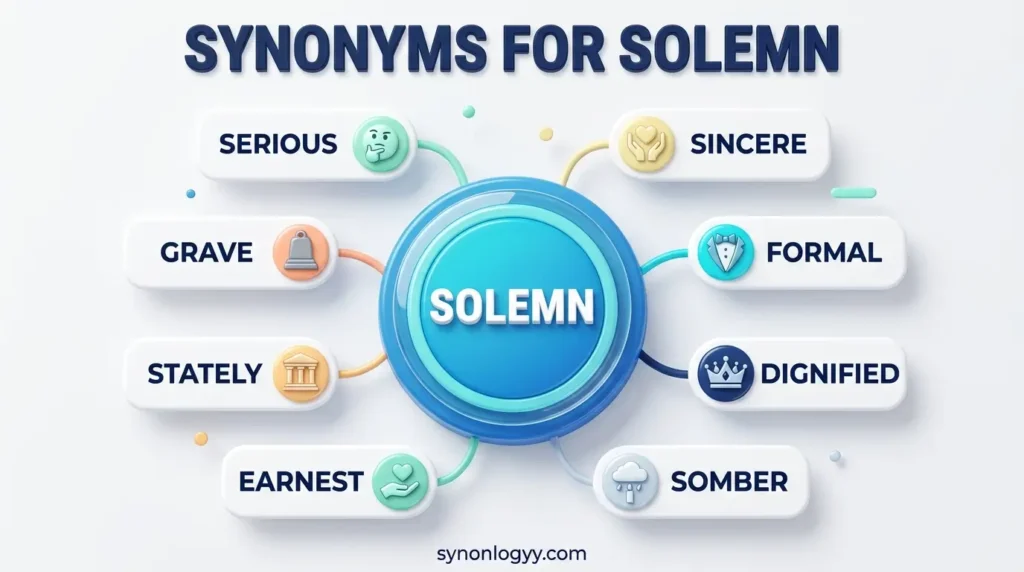
Solemn synonyms describe serious feelings, deep respect, or a quiet mood. Imagine attending a school assembly to honor a respected teacher.
Everyone stands quietly and listens with care. The atmosphere feels solemn because the moment deserves respect.
People often use the word solemn when discussing serious events, formal promises, or important occasions. However, using the same word too often can make writing feel dull.
Learning similar words helps you express your thoughts with greater care.
For ESL learners, synonyms build vocabulary and improve everyday communication. Students can use them in essays, while content writers can create clearer articles.
Each alternative has its own meaning and tone. Some words express respect, while others describe sadness or seriousness.
This guide explains the meaning of solemn, its 30 synonyms, and their real uses.
You will also learn about pronunciation, grammar, word history, antonyms, and useful differences. These tips will help you choose the right word for every situation.
Quick List: Solemn Synonyms at a Glance
These 30 words offer different ways to express seriousness, respect, or a formal mood.
Serious, grave, formal, dignified, earnest, sober, somber, reverent, respectful, ceremonial, heartfelt, sincere, thoughtful, subdued, restrained, austere, weighty,
momentous, important, meaningful, pensive, contemplative, meditative, mournful, sorrowful, funereal, prayerful, devout, majestic, stately.
Meaning of Solemn
Definition
Solemn (adjective): Serious, formal, or deeply respectful, often because something is important.
A solemn person may speak with care and show little humor. A solemn event often calls for respect, silence, or thoughtful behavior.
Examples
- The principal gave a solemn speech about student safety.
- Everyone remained solemn during the memorial service.
Common Collocations
These word pairs often appear in speech, stories, and formal writing.
- Solemn promise: He made a solemn promise yesterday.
- Solemn occasion: Graduation became a solemn occasion for everyone.
- Solemn ceremony: They attended a solemn ceremony together.
- Solemn expression: Her solemn expression showed deep concern.
- Solemn oath: The judge heard his solemn oath.
Connotative Meaning
(Connotation means the feeling or idea a word suggests.)
- Positive tone: Solemn can suggest honor, respect, sincerity, and dignity.
- Negative tone: It can suggest sadness, grief, or an uncomfortable seriousness.
- Neutral tone: It can describe a formal event without judging its mood.
The exact meaning depends on the situation. A solemn wedding may feel respectful and joyful. A solemn funeral usually carries grief and remembrance.
Etymology of Solemn
The word solemn has a long history in English. Its roots connect the word with established customs and important occasions.
The English word came through Old French solempne, from Latin sollemnis. The Latin word referred to something customary, established, or associated with a regular ceremony.
Over time, the English meaning became more closely linked to seriousness, dignity, and respect. Today, solemn often describes important events, serious promises, and thoughtful expressions.
Old English (450–1100)
The modern English word solemn is not recorded as a standard Old English word. Its later history comes through French and Latin rather than direct Old English formation.
Middle English (1100–1500)
English adopted forms of solemn through Anglo-French and Old French influence. The word was used for formal ceremonies and important religious occasions. Its meaning later developed toward seriousness and dignity.
Modern English (1500–Present)
Modern English uses solemn for serious behavior, formal promises, and respectful occasions. It can describe a person’s expression, a public ceremony, or an important statement.
The word still carries a sense of importance. However, it does not always mean sadness. A solemn promise can express strong commitment without any grief.
Pronunciation of Solemn (IPA)
- IPA (US): /ˈsɑːləm/
- Syllables: Two — sol-em
- Stress: The first syllable receives the main stress.
- Silent letter: The letter n is silent.
Say the word like “SAH-lum.” Do not pronounce the final n. The word rhymes approximately with column in many American accents.
Practice with this sentence: “The judge gave a solemn warning.”
Affixation Pattern of Solemn
Understanding word formation helps you recognize related words and use them correctly.
- Root: Solemn, meaning serious or dignified.
- Prefix: None in the basic word.
- Suffix: The ending -n belongs to the word’s spelling. It is not a productive suffix with a separate meaning.
- Word formations:
- Solemnly (adverb): In a serious or dignified manner.
- Solemnity (noun): The quality or state of being solemn.
- Solemnize (verb): To perform or mark an occasion formally, especially a marriage.
- Solemnized (verb, past tense): Formally performed or marked.
- Solemnizing (verb, present participle): Performing or marking something formally.
- Solemnization (noun): The formal performance of an event or ceremony.
Examples:
- The mayor spoke solemnly about public safety.
- The solemnity of the service moved the guests.
- The couple chose to solemnize their marriage privately.
The verb solemnize often appears in legal or ceremonial contexts. Use solemnly when describing how someone acts or speaks.
30 Synonyms of Solemn With Meaning & Examples
The best synonym depends on what makes a situation solemn. Some alternatives stress seriousness, while others express grief, respect, or ceremony.
1. Serious (adjective)
Meaning: Showing that something matters and deserves careful attention.
Best used when / Tone: Common, neutral, direct.
Examples:
- The doctor discussed the serious risks with the patient.
- During class, Maya adopted a serious tone about cheating.
2. Grave (adjective)
Meaning: Very serious, especially when danger or important consequences exist.
Best used when / Tone: Formal, strong, weighty.
Examples:
- Officials announced grave concerns about the damaged bridge.
- His grave warning stopped the team from entering.
3. Formal (adjective)
Meaning: Following accepted rules or customs for an important occasion.
Best used when / Tone: Professional, ceremonial, neutral.
Examples:
- Guests wore formal clothes for the state dinner.
- The company sent a formal notice about the meeting.
4. Dignified (adjective)
Meaning: Showing calm respect and self-control in an important situation.
Best used when / Tone: Respectful, positive, polished.
Examples:
- Despite the criticism, the mayor remained dignified.
- Her dignified response earned respect from the audience.
5. Earnest (adjective)
Meaning: Showing that you are sincere and deeply serious about something.
Best used when / Tone: Sincere, thoughtful, personal.
Examples:
- His earnest request convinced the group to reconsider.
- An earnest student asked how to improve her work.
6. Sober (adjective)
Meaning: Serious and calm, without excitement or humor.
Best used when / Tone: Restrained, mature, factual.
Examples:
- The news brought a sober mood to the office.
- A sober review revealed several risks in the plan.
7. Somber (adjective)
Meaning: Dark, serious, or sad in mood or appearance.
Best used when / Tone: Sad, subdued, emotional.
Examples:
- Gray clouds created a somber mood over town.
- The reporter shared somber news about the storm.
8. Reverent (adjective)
Meaning: Showing deep respect for someone or something sacred.
Best used when / Tone: Respectful, spiritual, formal.
Examples:
- Visitors stood in reverent silence inside the temple.
- Her reverent voice reflected respect for the old tradition.
9. Respectful (adjective)
Meaning: Showing care and respect for another person or thing.
Best used when / Tone: Polite, positive, everyday.
Examples:
- The class remained respectful during the guest’s speech.
- He wrote a respectful message to his former coach.
10. Ceremonial (adjective)
Meaning: Connected with a formal event or traditional ritual.
Best used when / Tone: Official, traditional, formal.
Examples:
- The guard carried a ceremonial sword across the square.
- Students wore ceremonial robes during the graduation event.
11. Heartfelt (adjective)
Meaning: Showing sincere and deep feelings.
Best used when / Tone: Warm, emotional, personal.
Examples:
- Her heartfelt thanks moved the volunteers to tears.
- The letter offered heartfelt support after the family loss.
12. Sincere (adjective)
Meaning: Honest and genuine in feelings, words, or actions.
Best used when / Tone: Honest, direct, trustworthy.
Examples:
- The manager gave a sincere apology for the mistake.
- His sincere concern helped calm the worried parent.
13. Thoughtful (adjective)
Meaning: Showing careful thought or concern for others.
Best used when / Tone: Gentle, reflective, considerate.
Examples:
- A thoughtful pause followed the teacher’s difficult question.
- She gave a thoughtful answer about the community’s needs.
14. Subdued (adjective)
Meaning: Quiet, restrained, or less lively than usual.
Best used when / Tone: Soft, restrained, understated.
Examples:
- The party became subdued after the sad announcement.
- A subdued crowd waited outside the hospital entrance.
15. Restrained (adjective)
Meaning: Controlled and not openly emotional or dramatic.
Best used when / Tone: Controlled, formal, measured.
Examples:
- The actor gave a restrained performance in the final scene.
- Her restrained reply kept the argument from growing.
16. Austere (adjective)
Meaning: Plain, strict, or without comfort and decoration.
Best used when / Tone: Severe, formal, serious.
Examples:
- The room’s austere design suited the memorial center.
- An austere speech focused only on the facts.
17. Weighty (adjective)
Meaning: Important and deserving serious thought or attention.
Best used when / Tone: Thoughtful, formal, substantial.
Examples:
- The committee faced weighty questions about public spending.
- His weighty decision changed the team’s future.
18. Momentous (adjective)
Meaning: Very important because it may bring major changes.
Best used when / Tone: Significant, powerful, formal.
Examples:
- The signing marked a momentous day for the nation.
- Her momentous choice began a new chapter in life.
19. Important (adjective)
Meaning: Having great value, meaning, or effect.
Best used when / Tone: Common, neutral, flexible.
Examples:
- The school held an important meeting about student welfare.
- Their important discussion helped settle the family dispute.
20. Meaningful (adjective)
Meaning: Having real value, purpose, or emotional significance.
Best used when / Tone: Warm, thoughtful, personal.
Examples:
- The memorial became a meaningful tribute to local heroes.
- His meaningful words gave the team fresh hope.
21. Pensive (adjective)
Meaning: Quietly thinking about something, often with some sadness.
Best used when / Tone: Reflective, literary, gentle.
Examples:
- A pensive look crossed her face after the phone call.
- He sat pensive by the window before making his choice.
22. Contemplative (adjective)
Meaning: Deeply thoughtful and focused on an idea or question.
Best used when / Tone: Reflective, intellectual, calm.
Examples:
- The artist took a contemplative walk before painting.
- A contemplative mood filled the library near closing time.
23. Meditative (adjective)
Meaning: Calm and focused on quiet thought or reflection.
Best used when / Tone: Peaceful, inward, spiritual.
Examples:
- Soft music created a meditative mood in the studio.
- Her meditative silence helped her consider the hard choice.
24. Mournful (adjective)
Meaning: Expressing or showing deep sadness after a loss.
Best used when / Tone: Sad, emotional, grief-filled.
Examples:
- A mournful song echoed through the empty hall.
- The dog gave a mournful cry at the closed door.
25. Sorrowful (adjective)
Meaning: Feeling or showing sadness and grief.
Best used when / Tone: Emotional, serious, compassionate.
Examples:
- The family shared a sorrowful farewell at the station.
- His sorrowful words described the loss of their home.
26. Funereal (adjective)
Meaning: Related to funerals or having a funeral-like mood.
Best used when / Tone: Literary, dark, grief-focused.
Examples:
- A funereal silence settled over the abandoned theater.
- The novel’s funereal tone matched its tragic ending.
27. Prayerful (adjective)
Meaning: Expressing prayer, devotion, or a desire for spiritual help.
Best used when / Tone: Religious, peaceful, respectful.
Examples:
- The family held a prayerful vigil before surgery.
- Her prayerful words brought comfort to the small group.
28. Devout (adjective)
Meaning: Deeply committed to religious belief and practice.
Best used when / Tone: Religious, respectful, committed.
Examples:
- The devout worshipper attended services every week.
- His devout faith shaped many choices throughout his life.
29. Majestic (adjective)
Meaning: Having great beauty, dignity, or impressive grandeur.
Best used when / Tone: Grand, elevated, admiring.
Examples:
- Majestic music filled the hall during the royal ceremony.
- The majestic building inspired awe among the visitors.
30. Stately (adjective)
Meaning: Having a dignified, formal, and impressive appearance or manner.
Best used when / Tone: Elegant, formal, traditional.
Examples:
- A stately procession moved slowly through the city square.
- The stately home welcomed guests for the official reception.
Synonym Comparison Table
The words below are useful alternatives, but each carries a slightly different meaning.
| Synonym | Tone | Formality | Best for |
|---|---|---|---|
| Serious | Direct, neutral | Everyday | Important issues |
| Grave | Strong, weighty | Formal | Danger or serious concerns |
| Formal | Official, structured | Formal | Events and procedures |
| Dignified | Calm, respectful | Medium to high | People and behavior |
| Earnest | Sincere, focused | Medium | Promises and requests |
| Sober | Restrained, calm | Medium | News and assessments |
| Somber | Sad, subdued | Medium | Grief and serious moods |
| Reverent | Deeply respectful | High | Sacred things and traditions |
| Heartfelt | Warm, emotional | Everyday | Thanks and sympathy |
| Momentous | Significant, powerful | High | Historic events and changes |
Prototype Meaning of Solemn
The typical image of solemn is a person standing quietly during an important ceremony. Their face looks serious, and their behavior shows respect.
People may also picture a judge taking an oath or a family attending a memorial. In these scenes, the mood is not playful or casual. The moment carries meaning, duty, or emotional weight.
However, solemn does not always mean sad. A wedding vow can be solemn because it expresses a serious promise. A graduation speech can feel solemn because it marks a major life change.
The shared idea is seriousness, often joined with respect or importance. Understanding this central meaning makes it easier to select a suitable synonym.
Prototype Categorization of the 30 Synonyms
The 30 synonyms belong to several groups. Each group highlights a different part of the word’s meaning.
- General seriousness: Serious, grave, sober, important. Use these words when a matter needs care, attention, or sound judgment.
- Respect and dignity: Dignified, respectful, reverent, stately. Choose these for people, ceremonies, and actions that show honor.
- Formal events and customs: Formal, ceremonial, austere. These fit official events, established customs, or strict settings.
- Sincerity and personal feeling: Earnest, heartfelt, sincere, meaningful. Use them when a person expresses honest feelings or a message carries personal value.
- Quiet thought and reflection: Thoughtful, pensive, contemplative, meditative. These words suit people who pause to think or consider difficult ideas.
- Quiet or controlled moods: Subdued, restrained. Choose these when emotions remain low, quiet, or carefully controlled.
- Sadness and grief: Somber, mournful, sorrowful, funereal. These words work best for loss, tragedy, and grief-filled settings.
- Importance and major change: Weighty, momentous. Use these for decisions, events, or questions with serious consequences.
- Religion and devotion: Prayerful, devout. These describe spiritual practice, religious commitment, or prayer.
- Grandeur and impressive presence: Majestic. Choose this when something feels grand, powerful, or awe-inspiring.
These groups help writers match a word to the exact feeling they want to express. They also reduce repetition while keeping meaning clear.
Remember that similar words are not always interchangeable. A funereal mood suggests death or grief, while a ceremonial event may be joyful or neutral.
Antonyms of Solemn
Antonyms express the opposite of solemn seriousness or formality. The best choice depends on the context.
- Playful (adjective): Full of fun and light activity. The children took a playful approach to the game.
- Cheerful (adjective): Happy and positive in mood. A cheerful greeting brightened the morning meeting.
- Lighthearted (adjective): Free from serious worry or sadness. They enjoyed a lighthearted chat after lunch.
- Humorous (adjective): Intended to make people laugh. His humorous speech made the audience smile.
- Casual (adjective): Relaxed and not very formal. The team held a casual lunch outside.
- Carefree (adjective): Free from worry or heavy concerns. The carefree travelers sang along the road.
- Festive (adjective): Full of celebration and lively enjoyment. A festive crowd gathered for the town fair.
- Jovial (adjective): Cheerful, friendly, and full of good humor. The jovial host welcomed every guest warmly.
- Giddy (adjective): So excited or happy that you feel lightheaded. The giddy students laughed after winning the contest.
- Flippant (adjective): Treating a serious matter without proper respect. His flippant comment upset the grieving family.
Some antonyms describe happiness, while others describe a lack of formality. Choose one that matches the opposite meaning you need.
Short Questions and Answers
What does solemn mean?
Solemn means serious, formal, or deeply respectful. It often describes an important event, a sincere promise, or a quiet expression.
A solemn person usually behaves with care and avoids playful actions. The word can suggest sadness, but it does not always mean someone feels unhappy.
When should solemn be used?
Use solemn when a moment deserves respect or serious attention. It works well for memorials, formal promises, religious services, and important public statements.
You can also use it for a person’s expression or voice. Choose another word if you mean simple sadness, happiness, or ordinary politeness.
Is solemn positive or negative?
Solemn can have a positive, negative, or neutral tone. It may express dignity, respect, and sincere commitment. It can also suggest grief or a serious mood.
The context determines its effect. A solemn promise often feels positive, while a solemn funeral usually carries sadness.
How is solemn different from similar words?
Solemn combines seriousness with respect or importance. Grave often stresses danger or consequences, while somber suggests sadness.
Formal describes rules or customs, and reverent expresses deep respect. These words overlap, but each highlights a different part of the situation.
What is the best synonym for solemn in formal writing?
Grave is useful when formal writing discusses serious risks or consequences. Dignified works better for respectful behavior, while ceremonial suits official rituals.
The best choice depends on your sentence. Consider the intended meaning before replacing solemn with another word.
What is a simple word to use instead of solemn?
Serious is usually the simplest alternative to solemn. It works in everyday speech, school assignments, and many professional settings.
However, it may not express respect or ceremony as clearly. Use respectful when honor matters, or formal when rules and customs matter.
Conclusion
Learning solemn synonyms helps you express serious ideas with greater care. Words such as serious, grave, and dignified suit different situations.
Others, like somber and mournful, focus more on sadness and loss. Choosing the right word makes your meaning clearer.
For ESL learners, these alternatives improve reading, speaking, and writing skills. Students can use them to make essays more precise.
Content writers can avoid repeated words while keeping their message natural. The key is to understand each word’s tone before using it.
You do not need to memorize all 30 words at once. Start with five common synonyms and write one sentence for each. Then practice using them in conversations, schoolwork, or short articles.
Review your sentences each day to build stronger vocabulary and lasting English confidence.