Synonyms for dirt help you describe soil, dust, stains, and unclean surfaces. Dirt is a common word for loose soil or something that makes a surface unclean.
Imagine muddy shoes leaving marks on your clean floor. You might call those marks dirt, mud, or grime, based on their type.
People use this word in daily speech, schoolwork, and online writing. Yet, using the same word again and again can make writing feel dull.
Learning similar words helps ESL learners grow their vocabulary and express ideas with greater care. It also helps content writers create clear, natural sentences without repeating words.
Some alternatives describe loose earth, while others refer to stains or built-up filth. This guide covers meanings, examples, pronunciation, grammar, word history, and related terms.
You will also learn how to choose the best word for each situation.
Quick List: Dirt Synonyms at a Glance
Here are 30 alternatives to dirt, grouped by their common meanings and uses.
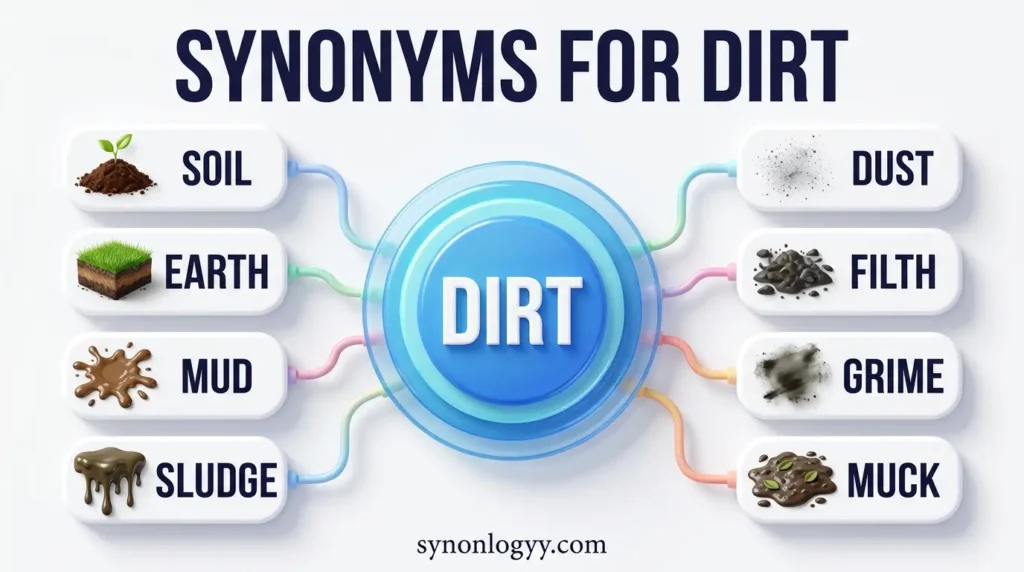
Soil, earth, mud, dust, grime, filth, muck, grit, sand, clay, loam, sludge, silt, debris, residue, stain, smudge, soot, grime buildup, crud, gunk, rubbish, litter, waste, impurity, contamination, pollution, muckiness, foulness, defilement.
Note: These words do not all mean the same thing. Some describe soil, while others refer to mess, stains, or harmful substances. Choose the word that fits your sentence.
Meaning of Dirt
Definition
Dirt (noun): Loose soil, dust, or unwanted matter that makes something dirty.
The word can also mean unpleasant or damaging information about someone. However, this guide focuses mainly on dirt as soil or unwanted matter.
Examples
- The children tracked dirt across the kitchen floor.
- Fresh dirt covered the roots of the young tree.
Common Collocations
These phrases often appear in everyday English.
- Dirt road: We drove along a dirt road.
- Dirt stain: A dirt stain marked his white shirt.
- Dirt pile: Workers moved the dirt pile.
- Dirt track: The cyclist raced around the dirt track.
- Dirt under fingernails: Dirt collected under her fingernails.
Connotative Meaning
(Connotation means the feeling or idea a word suggests beyond its basic meaning.)
- Positive tone: Dirt can suggest rich soil for growing plants.
- Negative tone: Dirt can suggest grime, mess, or poor hygiene.
- Neutral tone: Dirt can simply mean loose earth on the ground.
The surrounding words help readers understand the intended meaning.
Etymology of Dirt
The word dirt has a long history in English. Its early uses were linked to filth and unclean matter.
The word comes from Middle English drit, which referred to excrement or filth. Its history is also connected to Old Norse drit, with a similar meaning. Over time, its meaning broadened to include soil and unwanted matter.
Old English (450–1100)
The modern word dirt is not generally traced to a direct Old English form. Old English had other words for earth, soil, and filth.
Middle English (1100–1500)
The form drit appeared in Middle English. It referred to filth or excrement. The spelling and meaning later developed toward the modern word dirt.
Modern English (1500–Present)
In modern English, dirt commonly refers to soil or unwanted matter. It can also describe a dirty condition. In informal speech, it may mean damaging information about another person.
Pronunciation of Dirt (IPA)
- IPA (US): /dɝt/
- IPA (UK): /dɜːt/
- Syllables: One syllable.
- Word stress: The single syllable receives the stress.
In American English, the vowel sounds similar to the vowel in bird. In British English, it has a long central vowel.
Affixation Pattern of Dirt
Root
The root is dirt. It functions as a noun in common sentences.
Prefix
There is no common productive prefix in the basic word dirt.
Suffix
The word can take suffixes to form related words.
- -y: Dirty is an adjective meaning covered with dirt or unclean.
- -iness: Dirtiness is a noun describing an unclean state.
- -ier: Dirtier is the comparative form of dirty.
- -iest: Dirtiest is the superlative form of dirty.
- -ify: Dirty can also function as a verb meaning to make something unclean.
Word Formations
| Word | Part of speech | Meaning |
|---|---|---|
| Dirt | Noun | Soil or unwanted matter |
| Dirty | Adjective | Covered with dirt or unclean |
| Dirty | Verb | To make something dirty |
| Dirtier | Adjective | More dirty than something else |
| Dirtiest | Adjective | The most dirty in a group |
| Dirtiness | Noun | The state of being dirty |
30 Synonyms of Dirt With Meaning & Examples
The best synonym depends on what you mean by dirt. Some words describe natural ground, while others describe unwanted material on surfaces. The following list explains each word and shows how to use it naturally.
1. Soil (noun)
Meaning: Soil is the upper layer of earth where plants grow.
Best used when / Tone: Neutral, scientific, gardening.
Examples:
- The gardener added fresh soil to the flowerpot.
- Good soil helps young plants grow strong roots.
2. Earth (noun)
Meaning: Earth is the natural material that covers much of the ground.
Best used when / Tone: Neutral, descriptive, slightly literary.
Examples:
- The buried seed rested beneath the earth.
- She brushed loose earth from the garden tools.
3. Mud (noun)
Meaning: Mud is wet soil mixed with water.
Best used when / Tone: Everyday, concrete, informal.
Examples:
- Heavy rain turned the playground into mud.
- His muddy boots left marks near the doorway.
4. Dust (noun)
Meaning: Dust is a fine powder of tiny particles that settle on surfaces.
Best used when / Tone: Neutral, household, descriptive.
Examples:
- Sunlight revealed dust on the old bookshelf.
- The cleaner wiped dust from every office desk.
5. Grime (noun)
Meaning: Grime is a layer of dirt that builds up on surfaces.
Best used when / Tone: Negative, informal, descriptive.
Examples:
- Black grime covered the kitchen extractor fan.
- The mechanic scrubbed grime from his hands.
6. Filth (noun)
Meaning: Filth is very dirty or unpleasant material.
Best used when / Tone: Strong, negative, emotional.
Examples:
- The report described the filth inside the abandoned building.
- Volunteers removed filth from the neglected public restroom.
7. Muck (noun)
Meaning: Muck is wet, soft dirt or other unpleasant matter.
Best used when / Tone: Informal, earthy, sometimes humorous.
Examples:
- Farm workers cleaned muck from the cattle stalls.
- The dog rolled happily in the garden muck.
8. Grit (noun)
Meaning: Grit is small, hard particles of sand or stone.
Best used when / Tone: Neutral, practical, physical.
Examples:
- Grit crunched beneath her shoes on the path.
- The repair worker removed grit from the machine.
9. Sand (noun)
Meaning: Sand consists of tiny grains of rock or minerals.
Best used when / Tone: Neutral, specific, natural.
Examples:
- Children brushed sand from their beach towels.
- Fine sand slipped through the gardener’s fingers.
10. Clay (noun)
Meaning: Clay is a fine-grained natural earth material that becomes moldable when wet.
Best used when / Tone: Neutral, technical, artistic.
Examples:
- The artist shaped wet clay into a bowl.
- Builders tested the clay beneath the new house.
11. Loam (noun)
Meaning: Loam is fertile soil made from a balanced mix of sand, silt, and clay.
Best used when / Tone: Technical, gardening, positive.
Examples:
- The farmer planted vegetables in rich loam.
- Gardeners often choose loam for healthy flower beds.
12. Sludge (noun)
Meaning: Sludge is thick, wet material that often contains waste.
Best used when / Tone: Negative, industrial, technical.
Examples:
- The factory removed sludge from its treatment tank.
- Thick sludge blocked the drainage channel after the storm.
13. Silt (noun)
Meaning: Silt is fine soil carried and deposited by water.
Best used when / Tone: Scientific, environmental, neutral.
Examples:
- Floodwater left silt across the farmer’s field.
- The river carried silt toward the lake.
14. Debris (noun)
Meaning: Debris is scattered pieces of broken or discarded material.
Best used when / Tone: Neutral, formal, news reporting.
Examples:
- Rescue teams cleared debris from the damaged road.
- Workers collected debris after the roof collapsed.
15. Residue (noun)
Meaning: Residue is material left behind after a process or action.
Best used when / Tone: Neutral, scientific, formal.
Examples:
- The laboratory found residue inside the glass container.
- Soap residue made the bathroom mirror look cloudy.
16. Stain (noun)
Meaning: A stain is a mark that changes a surface’s color.
Best used when / Tone: Everyday, specific, practical.
Examples:
- Coffee left a stain on the office carpet.
- The student removed a stain from her school uniform.
17. Smudge (noun)
Meaning: A smudge is a blurry or dirty mark on a surface.
Best used when / Tone: Informal, visual, mild.
Examples:
- A greasy smudge covered the phone screen.
- The artist erased a pencil smudge from the sketch.
18. Soot (noun)
Meaning: Soot is a black powder produced by incomplete burning.
Best used when / Tone: Specific, descriptive, technical.
Examples:
- Soot darkened the walls above the fireplace.
- Inspectors found soot around the damaged chimney.
19. Crud (noun)
Meaning: Crud is an informal word for unwanted dirt or unpleasant material.
Best used when / Tone: Informal, dismissive, mildly negative.
Examples:
- The technician scraped crud from the keyboard.
- A layer of crud clogged the old showerhead.
20. Gunk (noun)
Meaning: Gunk is thick, sticky, or unpleasant dirt and material.
Best used when / Tone: Informal, vivid, slightly humorous.
Examples:
- Sticky gunk covered the bottom of the lunchbox.
- The plumber cleared gunk from the kitchen drain.
21. Rubbish (noun)
Meaning: Rubbish is unwanted material that people throw away.
Best used when / Tone: Everyday, common in British English.
Examples:
- Rubbish gathered beside the overflowing street bin.
- The caretaker removed rubbish from the schoolyard.
Note: In American English, trash or garbage is often more common.
22. Litter (noun)
Meaning: Litter is waste left in public or other places.
Best used when / Tone: Environmental, negative, public spaces.
Examples:
- Volunteers picked litter from the park entrance.
- The city fined drivers who threw litter onto roads.
23. Waste (noun)
Meaning: Waste is unwanted material left after use or production.
Best used when / Tone: Neutral, formal, industrial.
Examples:
- The factory separated waste before recycling it.
- Food waste filled the compost bin by evening.
24. Impurity (noun)
Meaning: An impurity is an unwanted substance mixed with another material.
Best used when / Tone: Formal, scientific, technical.
Examples:
- The lab detected an impurity in the water sample.
- The jeweler checked the metal for impurities.
25. Contamination (noun)
Meaning: Contamination is the presence of unwanted or harmful substances.
Best used when / Tone: Formal, scientific, health-related.
Examples:
- Officials investigated contamination in the drinking water.
- Proper storage reduced contamination in the food supply.
26. Pollution (noun)
Meaning: Pollution is harmful material or energy that damages the environment.
Best used when / Tone: Environmental, formal, negative.
Examples:
- Pollution darkened the air above the busy city.
- The community campaigned against pollution in the river.
27. Foulness (noun)
Meaning: Foulness is the state of being dirty, offensive, or unpleasant.
Best used when / Tone: Strong, formal, sometimes literary.
Examples:
- The inspector noted the foulness of the neglected kitchen.
- Residents complained about the foulness near the waste site.
28. Defilement (noun)
Meaning: Defilement is the act or state of making something dirty or impure.
Best used when / Tone: Formal, serious, literary.
Examples:
- The law addressed the defilement of protected water sources.
- The story described the defilement of a sacred place.
29. Muckiness (noun)
Meaning: Muckiness is the state of being covered in wet dirt or muck.
Best used when / Tone: Informal, descriptive, less common.
Examples:
- The children laughed about the muckiness of their clothes.
- Heavy rain increased the muckiness of the farmyard.
30. Dirt buildup (noun phrase)
Meaning: Dirt buildup is a layer of dirt that collects over time.
Best used when / Tone: Practical, descriptive, household or technical.
Examples:
- Regular cleaning prevented dirt buildup around the window.
- The technician inspected dirt buildup inside the air filter.
Synonym Comparison Table
These ten alternatives cover the most common meanings of dirt.
| Synonym | Tone | Formality | Best for |
|---|---|---|---|
| Soil | Neutral | Standard | Plants and gardens |
| Earth | Neutral | Standard | Ground and natural land |
| Mud | Informal | Standard | Wet soil |
| Dust | Neutral | Standard | Fine particles on surfaces |
| Grime | Negative | Standard | Built-up surface dirt |
| Filth | Strong | Standard | Severe uncleanliness |
| Muck | Informal | Casual | Wet, unpleasant matter |
| Grit | Neutral | Standard | Small, hard particles |
| Debris | Neutral | Formal | Scattered broken material |
| Residue | Neutral | Formal | Material left behind |
The key difference is the type of material each word describes. Use soil for growing plants, mud for wet ground, and dust for fine particles. Choose grime for built-up dirt and debris for scattered broken pieces.
Prototype Meaning of Dirt
The prototype meaning of dirt is loose soil or unwanted material found on the ground or a surface. Most people picture brown earth on shoes, dust on furniture, or a muddy mark on a clean floor.
These familiar examples show why the word has several related meanings.
The exact meaning depends on the situation. Dirt in a garden may help plants grow, but dirt on a white shirt may look unpleasant. In a workshop, dirt might mean dust or grease.
In a scientific report, a more precise term may be needed.
Prototype Categorization of the 30 Synonyms
The following groups show how these words relate to different kinds of dirt. They help you choose an accurate term instead of replacing dirt with any similar word.
- Natural ground materials: Soil, earth, mud, sand, clay, loam, and silt. Use these words for the ground, gardening, farming, or natural deposits.
- Fine particles and small pieces: Dust, grit, soot, and debris. Choose these terms for tiny particles, black powder, or scattered broken material.
- Built-up dirt and mess: Grime, filth, muck, crud, gunk, muckiness, and dirt buildup. These words describe dirty surfaces, sticky material, or unpleasant messes.
- Marks and leftover material: Stain, smudge, and residue. Use them for marks, blurred spots, or material left behind after cleaning or another process.
- Discarded material: Rubbish, litter, and waste. These words describe unwanted items, especially things people throw away.
- Unwanted or harmful substances: Impurity, contamination, and pollution. Use them in science, health, manufacturing, and environmental writing.
- Severe or offensive conditions: Foulness and defilement. These terms express strong ideas about uncleanliness, impurity, or damage to something valued.
These categories make word choice easier. They help writers match the word to the material, setting, and intended tone.
Remember that similar words are not always interchangeable: sand is a type of natural particle, while pollution refers to harmful environmental effects.
Antonyms of Dirt
Antonyms are words with opposite or contrasting meanings. Since dirt can mean soil or unclean matter, its opposites depend on the context.
- Clean (adjective): Free from dirt or unwanted marks. She kept her desk clean.
- Cleanliness (noun): The state of being clean. Cleanliness matters in every kitchen.
- Purity (noun): The state of being free from unwanted substances. The test confirmed the water’s purity.
- Sterility (noun): A state free from living microorganisms. The medical team maintained sterility during surgery.
- Sanitation (noun): Measures that protect health through clean conditions. Better sanitation improved the village’s water supply.
- Hygiene (noun): Practices that help maintain health and cleanliness. Good hygiene reduces the spread of germs.
- Freshness (noun): The state of being fresh or newly clean. Freshness gave the room a pleasant feel.
- Orderliness (noun): The state of being neat and organized. Orderliness made the small office easier to use.
- Spotlessness (noun): The state of having no visible marks or dirt. The hotel staff maintained spotlessness in every room.
These are mainly antonyms of dirt in the sense of unclean matter. They are not direct opposites when dirt means natural soil.
Short Questions and Answers
What does dirt mean?
Dirt usually means loose soil, dust, or unwanted matter that makes something unclean. It can appear on floors, clothes, tools, and other surfaces.
In informal speech, dirt can also mean harmful information about someone. The intended meaning depends on the sentence.
When should dirt be used?
Use dirt when you mean soil or unwanted material in a general, everyday context. It works well in casual conversation and simple writing.
Choose a more exact word, such as mud, dust, or grime, when the type of material matters.
Is dirt positive or negative?
Dirt can have a neutral, positive, or negative meaning. In a garden, it may refer to useful soil that supports plant growth. On clothing, it often suggests an unwanted mess.
The surrounding words and situation determine its tone.
How is dirt different from similar words?
Dirt is a broad term for soil or unwanted matter. Soil usually refers to the ground where plants grow, while mud means wet soil.
Dust describes fine particles, and grime refers to dirt that builds up on surfaces. Each word has a more specific use.
What is the best synonym for dirt in formal writing?
The best formal synonym depends on the subject. Use soil in gardening or environmental writing, debris for scattered broken material, and residue for material left behind.
In scientific reports, contamination or impurity may be more accurate when harmful or unwanted substances are present.
What is a simple word to use instead of dirt?
Soil is a simple choice when you mean natural earth. Use mud for wet soil and dust for fine particles. If you mean a dirty mark, stain may fit better. Always choose the word that matches the material or condition.
Conclusion
Learning synonyms for dirt helps you express ideas with greater accuracy. You can describe garden soil, wet mud, fine dust, or built-up grime without repeating one word.
Each alternative has its own meaning, tone, and best use. This knowledge helps ESL learners understand everyday English and build stronger speaking skills.
It also helps students write clear answers and content writers create more natural articles. Remember to consider the material, setting, and purpose before choosing a synonym.
A word that works for a garden may not fit a laboratory report. Start by learning a few useful alternatives, then practice them in your own sentences.